
What the Day Is
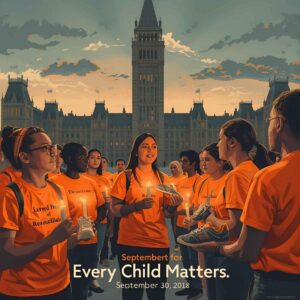
Canada’s National Day for Truth and Reconciliation is observed every year on September 30. It honours residential school Survivors, the children who never came home, and their families and communities, and it invites all Canadians to learn about and reflect on the ongoing impacts of the residential school system.
The date intentionally coincides with Orange Shirt Day, a grassroots commemoration that began with Survivor Phyllis Webstad’s story. In 2021, Parliament created the day as a federal statutory holiday in response to Call to Action #80 of the Truth and Reconciliation Commission (TRC).
Why September 30 and the Meaning of the Orange Shirt
Orange Shirt Day started when Phyllis Webstad shared how, at six years old, her new orange shirt was taken from her on her first day at a residential school, a symbol of how children were stripped of identity and dignity.
Wearing orange on September 30 has since become a national act of remembrance and education: a way to say “Every Child Matters.”
The History Behind the Day: Canada’s Residential Schools and the TRC
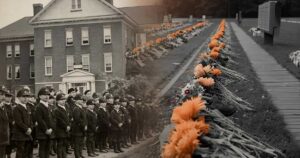
From the 19th century into the late 20th century, the Canadian government and several churches operated a network of Indian Residential Schools designed to assimilate Indigenous children.
Abuse, neglect, and cultural suppression were widespread, and many children died far from home. The Truth and Reconciliation Commission of Canada (2008–2015) documented the system’s history, gathered thousands of Survivor testimonies, and issued 94 Calls to Action, including the creation of a national day of remembrance. The TRC concluded that the residential school policy constituted cultural genocide.
In May 2021, the Tk’emlúps te Secwépemc First Nation publicly shared ground-penetrating radar findings of remains linked to the former Kamloops Indian Residential School, intensifying public awareness and urgency around commemoration and accountability. Similar confirmations have since been made at other school sites.
Why This Day Matters
- Commemoration: It publicly acknowledges harms that Survivors and communities carried privately for generations.
- Education: It invites all Canadians to learn the true history, essential to preventing repetition of harm.
- Accountability and action: It keeps attention on the TRC’s Calls to Action, many of which remain outstanding.
How the Day Is Marked Across Canada
The federal government and federally regulated workplaces observe September 30 as a paid holiday; provinces and territories vary in their formal recognition.
Across the country, schools, communities, and institutions host teach-ins, memorial walks, and cultural events, with orange shirts as a visible symbol of solidarity.
Comparing Canada and the United States: History, Policy, and Public Reckoning
Parallel Histories of Assimilation Schools
Both countries ran systems that forcibly removed Indigenous children from their families to suppress language and culture.
In the U.S., the Federal Indian Boarding School Initiative has identified 408 federal schools operating between 1819 and 1969 (with more non-federal institutions beyond that) and has confirmed dozens of marked and unmarked burial sites; follow-on work published in 2024 reports at least 973 child deaths identified to date and 74 burial sites at 65 locations, with numbers expected to grow as investigations continue.
Canada’s TRC traced a similar legacy and its profound intergenerational effects.
Key Difference
Canada created a national Truth and Reconciliation Commission with a comprehensive final report and specific Calls to Action, including a national day of commemoration.
The U.S. has launched investigative work under Interior Secretary Deb Haaland but has not established a national TRC for boarding schools, nor a federal holiday dedicated to that history. Some in the U.S. recognize Indigenous Peoples’ Day as an alternative to Columbus Day. President Biden recognized Indigenous Peoples’ Day as president since 2021, but it is not yet a federal holiday.
National Days and Official Apologies
- Canada: National Day for Truth and Reconciliation (Sept. 30) is a federal holiday; federal leaders and churches have issued formal apologies, including Pope Francis’s 2022 “pilgrimage of penance.”
- United States: There is no federal holiday specifically for boarding school remembrance. The U.S. does observe Native American Heritage Day (the Friday after Thanksgiving) and Juneteenth (June 19) as national holidays—Juneteenth recognizing the end of chattel slavery in Texas in 1865. Congress has also issued a formal apology to Native peoples (2009), and in 2024 the President offered a direct apology for the boarding schools.
Addressing Slavery, Discrimination, and Reparations
In the U.S., a long-running national debate concerns H.R. 40, a proposal to create a federal commission to study the legacy of slavery and recommend remedies. The bill has been introduced across multiple Congresses (including 2025) but has not been enacted; some states and cities have formed their own task forces.
Canada, while not a slave-society in the same legal way as the antebellum U.S., grapples with systemic racism affecting Black and other racialized communities alongside Indigenous reconciliation.
Differences in Public Culture and Attitudes
National Framing of Reconciliation
Canada’s reconciliation discourse is anchored by an official TRC, numbered Calls to Action, and a national day that centres Survivor testimony.
The U.S. boarding school reckoning is advancing through executive-branch investigation and community-led remembrance, but with less uniform national ritual or policy consensus so far.
Visibility in Civic Life
In Canada, orange shirts, school curricula, and local ceremonies have become widely recognized on September 30.
In the U.S., public attention around Native issues often concentrates in November (Native American Heritage Month) and on state or local initiatives, while Juneteenth has rapidly become a widely recognized national commemoration of the end of slavery.
Policy Follow-Through
Both countries have issued apologies and begun investigations; both also face critiques that symbolic gestures must be matched by measurable outcomes, such as implementing TRC Calls to Action in Canada or funding community-led searches, language revitalization, health services, and records access in both countries.
How to Engage Meaningfully on September 30 (and Beyond)
- Learn and listen: Read the TRC’s Executive Summary and Calls to Action; explore resources from the National Centre for Truth and Reconciliation.
- Participate respectfully: Wear an orange shirt and attend local events; follow community protocols when visiting memorials or former school sites.
- Support Survivors and communities: Contribute to Indigenous-led organizations working on healing, language, and cultural revitalization; advocate for transparent records access and sustained funding for site investigations.
- Carry it into your work: For institutions, align policies and budgets with reconciliation commitments and the TRC Calls to Action, not just statements.
Conclusion
The National Day for Truth and Reconciliation is not simply a holiday; it is a public commitment to remember, to learn, and to act.
Canada’s formalized approach, rooted in a national commission and a dedicated day, differs from the United States’ more decentralized path, where federal investigations and newer holidays like Juneteenth reflect parallel reckonings with history.
In both countries, the measure of progress will be the same: whether remembrance translates into repair.